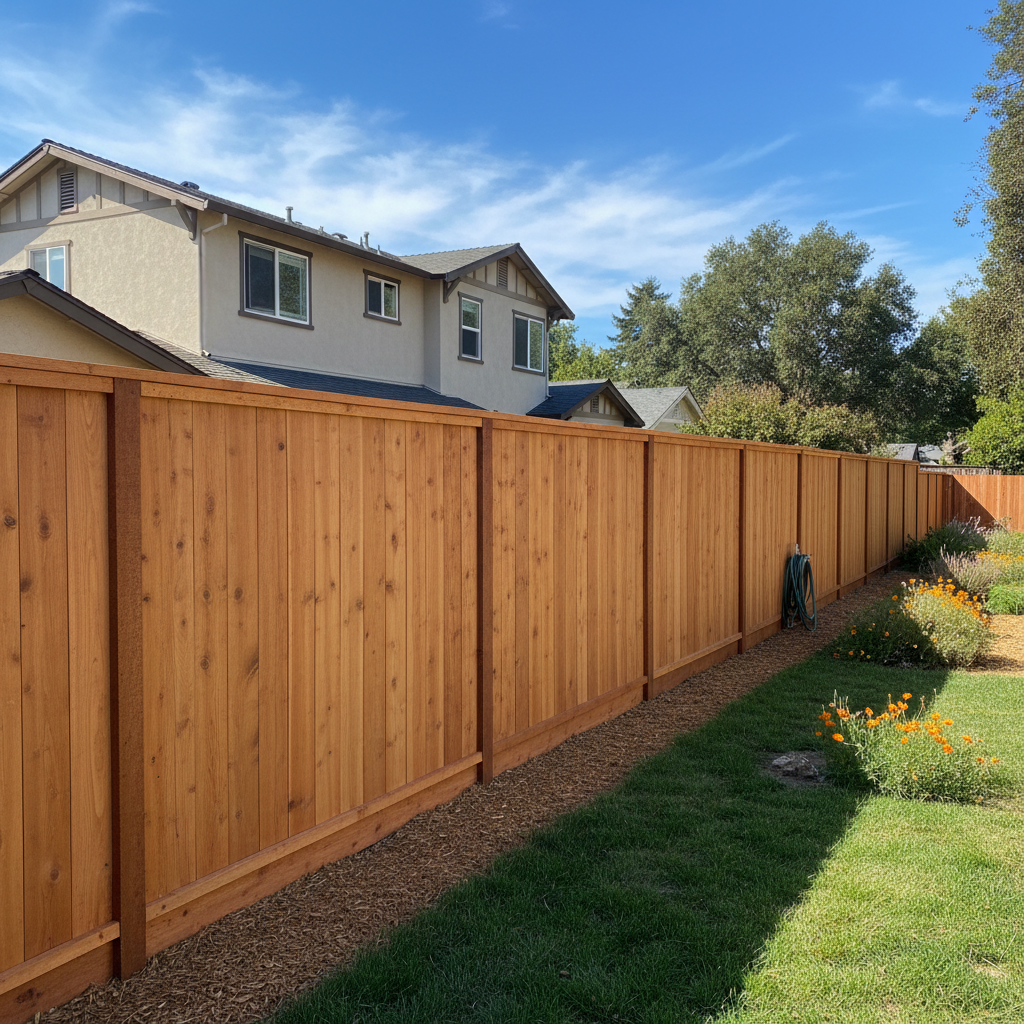
So, you've got yourself a beautiful new privacy fence. Maybe it's a classic redwood, a sturdy cedar, or even a modern composite. Whatever you picked, it's a big investment in your home's curb appeal and your family's peace of mind. But here's the thing: that fence isn't just going to magically stay perfect forever, especially not with our Benicia weather. You've got to put in a little work to keep it looking sharp and doing its job for years to come.
Extend Your Fence's Life: It's All About Protection
Think of your fence like your car. You wouldn't buy a new car and never wash it or change the oil, right? Same goes for your fence. The biggest enemy for most privacy fences around here, especially wood ones, is the sun and moisture. We get plenty of both, sometimes in quick succession. Those hot, dry summers followed by our damp, foggy mornings can really do a number on wood.
For wood fences, sealing or staining is your best friend. If your fence wasn't pre-treated or stained during installation, you'll want to get on that within a few months. A good quality stain or sealant does a few things: it protects against UV rays, which cause fading and cracking; it repels water, preventing rot and mildew; and it just makes your fence look better. I usually recommend a semi-transparent stain for wood fences. It lets the natural beauty of the wood show through while still offering excellent protection. You'll probably need to reapply every 2-5 years, depending on the product and how much sun your fence gets.
For composite fences, you've got it a bit easier. They're designed to be low maintenance, so you won't need to stain or seal. Just keep 'em clean, and they'll hold up great.
Regular Maintenance: Your Fence's Health Check
This isn't rocket science, but it makes a huge difference. Set aside a couple of hours a few times a year, maybe once in spring and once in fall, to give your fence a good once-over.
- Clean it up: Dirt, grime, mildew, and even cobwebs can build up. For wood and composite, a simple wash with a garden hose and a soft brush can do wonders. If you've got stubborn mildew, a mild bleach solution (1 part bleach to 4 parts water) or an oxygen bleach cleaner works well, but always test in an inconspicuous spot first. Pressure washers can be great, but be super careful with wood – too much pressure can damage the fibers. Keep the nozzle moving and don't get too close.
- Check for loose bits: Walk the perimeter of your fence. Are there any loose pickets? Nails popping out? Screws that have backed out a bit? Tighten screws, hammer in nails, or replace any fasteners that are rusted or failing. This is especially important after a windy spell, which we certainly get here in Benicia, particularly up on the hills near the Carquinez Strait.
- Trim back foliage: Any plants, bushes, or tree branches touching your fence are bad news. They hold moisture against the wood, encourage rot, and can even provide pathways for pests. Keep a good 6-12 inches of clearance between your fence and any greenery.
- Inspect the ground: Make sure water isn't pooling at the base of your fence posts. Proper drainage is key to preventing rot at the ground line, which is a common failure point for wood fences.
Warning Signs: Don't Ignore These Red Flags
Your fence will tell you when it's not happy. You just need to know what to look for.
- Fading or graying wood: This means the UV protection from your stain or sealant is wearing off. Time for a new coat!
- Cracks or splinters: Small cracks are normal as wood ages, but deep cracks or excessive splintering can indicate the wood is drying out and losing its integrity.
- Soft spots or discoloration: Push on the wood with your thumb or a screwdriver. If it feels soft or spongy, you've got rot. Discolored areas, especially dark spots, can also be a sign of moisture damage or mildew.
- Leaning posts or panels: This is a big one. If your fence is leaning, it usually means the posts are rotting at the ground line, or the concrete footings have failed. This needs immediate attention before the whole thing comes down.
- Loose gates: A gate that sags or doesn't close properly isn't just annoying; it can put stress on the entire fence structure. Check hinges, latches, and the gate frame itself.
- Pest damage: Look for small holes, sawdust-like material (frass), or tunnels in the wood. Termites and carpenter ants are definitely something we deal with in our area, and they can do serious damage if left unchecked.
When to Call a Professional
Look, a lot of basic maintenance you can handle yourself. But there are times when it's smarter, safer, and ultimately more cost-effective to bring in the pros. Here's when you should pick up the phone:
- Major structural damage: If posts are rotted, panels are falling down, or your fence is leaning significantly, you're probably beyond a DIY fix. Repairing or replacing posts correctly requires specific tools and expertise to ensure stability.
- Widespread rot or pest infestation: If you've got rot in multiple sections or suspect a widespread pest problem, a professional can assess the full extent of the damage and recommend the best course of action, which might involve replacing entire sections.
- Gate replacement or complex repairs: Gates can be tricky. Getting them to hang straight, swing freely, and latch securely often takes a bit of finesse. If yours is beyond a simple hinge adjustment, a pro can get it right.
- You're short on time or tools: Let's be honest, not everyone has the time, the right tools, or the desire to spend a weekend fixing a fence. That's perfectly fine. We're here for that.
- When in doubt: If you see something that just doesn't look right and you're not sure what it is or how to fix it, give us a call. It's always better to catch small problems before they become big, expensive ones.
Keeping your privacy fence in top shape doesn't have to be a huge chore. A little regular attention goes a long way in protecting your investment and keeping your yard looking great. And if you ever need a hand, or just want some advice, you know who to call. Integrity Fencing Benicia is always ready to help our neighbors.